

This month, we have a short but exciting newsletter to share! From an important milestone in our U.S. regulatory journey to an upcoming APHL webinar and new scientific publications — here are the latest updates from Capitainer.

🎉An Important Milestone in Capitainer’s U.S. Regulatory Journey
Capitainer has reached an important milestone in its U.S. regulatory strategy, with the first clinical sample collected as part of an HbA1c study intended to support a planned FDA 510(k) submission.
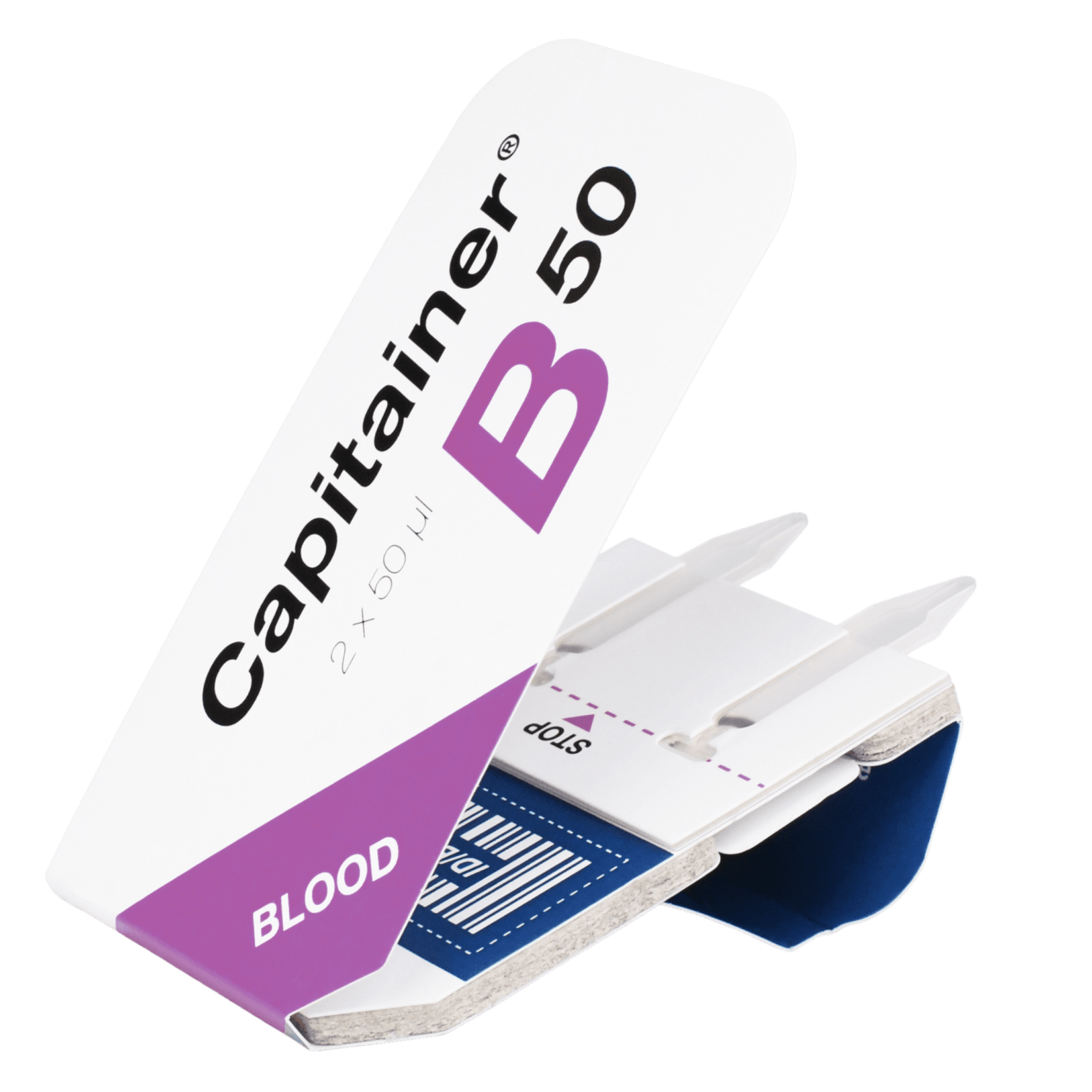
The study will evaluate both self-sampling and assisted capillary blood collection using Capitainer®B50, comparing HbA1c results with those obtained from conventional venous blood samples.
With clinical samples analyzed by the laboratories Three Rivers Diagnostics and Aegis Sciences Corporation, this marks an important step toward our goal of making blood testing more accessible and convenient.
Read more about the study and our next steps in the full press release here.
🩸Capillary Blood Sampling for HIV and Hepatitis Testing – APHL Webinar
How can capillary blood sampling support more accessible HIV and hepatitis testing?
In an upcoming webinar hosted by the Association of Public Health Laboratories (APHL), experts from Örebro University Hospital will share their experiences using Capitainer’s sampling technology for HIV, hepatitis B (HBV), and hepatitis C (HCV) testing.
The session will also feature experts from the U.S. Food and Drug Administration (FDA), discussing key regulatory considerations for adopting capillary blood collection devices in the United States.
Join the webinar to explore practical laboratory experiences and opportunities for capillary blood sampling beyond traditional healthcare settings. Register here.
🔎New Research Highlights the Potential of Microsampling Across Multiple Applications
From diabetes monitoring to thyroid function and kidney health, new research continues to explore how microsampling can support more accessible, patient-centered testing.
Several new scientific publications featuring Capitainer’s technology were published in Clinical Chemistry this October, covering applications such as HbA1c, creatinine, TSH, and urinary albumin-to-creatinine ratio (uACR).
The studies contribute to the growing body of research on quantitative microsampling and its potential to support testing beyond traditional healthcare settings.
Explore the latest research here.