

At-home and remote sampling can make healthcare testing more accessible by allowing people to collect samples without attending a healthcare facility. For blood testing, finger-prick sampling can also avoid the need for a conventional venous blood draw and the trained personnel required to perform it. These advantages have helped to expand the possibilities for self-sampling in applications ranging from disease screening and monitoring to therapeutic drug monitoring and large-scale public health studies.
However, successful self-sampling depends not only on convenience, but also on the quality and reliability of the sample collected. In this article, we look at the factors that should be considered when choosing or developing a device for self-sampling.
Exact volume collection
For many quantitative laboratory tests, knowing exactly how much sample has been collected is crucial. This can be challenging with conventional dried blood spot (DBS) cards, where an unknown volume of blood is applied to filter paper and a smaller disc is subsequently punched from the dried spot for analysis.
The amount of blood contained within these punches can vary considerably. Blood volume, how the blood spreads across the filter paper and hematocrit (the proportion of red blood cells in blood) can all influence test results. This variability may introduce analytical bias and is one reason why conventional DBS has traditionally been more suited to qualitative or semi-quantitative applications.
Volumetric microsampling technologies address this issue by collecting a predefined volume of blood onto the dried sample matrix. This gives the laboratory a known starting sample volume and can support more accurate and reproducible quantitative analysis.
Ease of use and patient usability
A good self-sampling device should make correct sample collection as straightforward as possible, even when no healthcare professional is present. The risk of user error should be as low as possible, with clear instructions for preparing the sampling site, collecting the sample, confirming successful collection and packaging the sample for return to a laboratory.
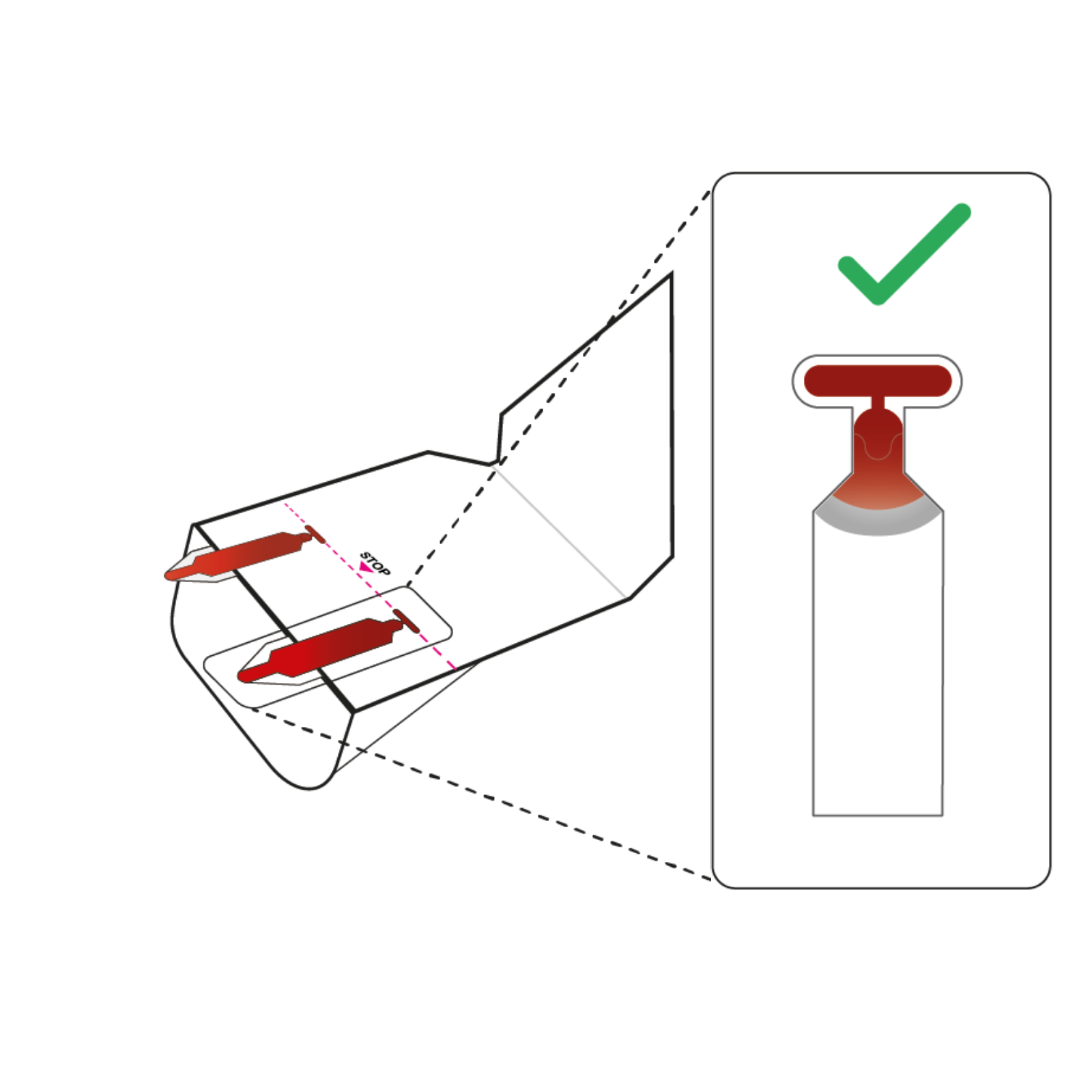
For finger-prick blood sampling, appropriate lancet choice, preparation of the fingertip and correct application of blood can all influence whether enough sample is obtained. Device features that indicate when sufficient sample has been collected can help reduce sampling errors. If a device is difficult to use, unsuccessful collections can result in samples that cannot be analyzed, requiring repeat testing and reducing the practical benefits of collecting samples at home.
Sample quality and consistency
Besides collecting the correct sample volume, how the sample is collected can also affect its quality and the accuracy of downstream analysis. For example, excessive squeezing or “milking” of the fingertip can damage red blood cells, while contamination with interstitial fluid can alter sample composition. Good device design and clear sampling instructions can help minimize these sources of variation and make collection more consistent between users. These considerations also place practical limits on the volume of blood that can be collected reliably by self-sampling, supporting the use of microsampling approaches that require only small sample volumes.
This is particularly important for quantitative testing, where even small variations in sample collection can affect the measured result. Self-sampling technologies that help control these variables can therefore improve sample consistency before the sample reaches the laboratory.
Drying and transport stability
Once a sample has been collected, it may be several days before it reaches the laboratory. Liquid blood can be operationally demanding because biological and enzymatic processes continue after collection. Depending on the analyte being measured, samples may require rapid processing, refrigeration, freezing or stabilizing additives. These sample stability requirements are relatively easy to manage within a hospital or laboratory but become more complicated when samples are collected remotely.
Drying blood can make samples easier to store and transport by reducing the biological activity that continues in liquid blood. For suitable analytes, this may enable ambient-temperature storage and postal return. However, stability still depends on factors such as temperature, humidity, drying conditions, packaging and storage time, and must be established for the intended analyte and analytical method. Dried samples can also make remote testing more cost-effective, particularly at scale, by reducing the need for temperature-controlled transport and making individual sample shipments simpler and less expensive than shipping liquid blood.
Contamination risks
Moving sampling away from trained healthcare personnel also makes it important to minimize contamination risk. Contamination can occur at different points in the sampling process, from preparing the collection site to handling of the sample after collection. The person taking the sample may accidentally touch the collection area, while exposure during drying and packaging can introduce additional risks.
Device design can help protect the sample. For example, using pre-cut sampling discs can avoid contamination that might otherwise be introduced when discs are manually punched from traditional DBS cards. Devices that allow the collected sample to dry while remaining physically protected may provide an additional advantage for home or remote sampling, where samples must subsequently be transported to a laboratory.
Regulatory considerations
Finally, the complete self-sampling workflow needs to be validated for its intended application, including the sampling device, sample volume, storage and transport conditions, extraction method and downstream analytical platform.
Previous work with DBS has shown that different analytes can require very different extraction and analysis approaches, making case-by-case validation important. Established applications also illustrate that sampling materials themselves may need to meet defined performance requirements. For example, blood sampling cards approved for newborn screening are assessed against criteria relating to blood absorption and homogeneous spreading through the filter material.
Today, most tests based on dried microsamples must be validated as so-called Laboratory Developed Tests (LDTs) or In-House Developed Tests (IHDTs). While this validation process is a routine procedure for laboratories and can be carried out relatively easily, it still requires time and resources. Looking ahead, the inclusion of dried microsamples as an approved sample type in diagnostic assays is expected to accelerate the adoption of these patient-centric sampling solutions and make them more widely accessible.
Ultimately, a good self-sampling device must work well for both the user and the laboratory. For the user, it should be simple and comfortable to use, and designed to minimize the risk of incorrect collection. For the laboratory, it should provide a consistent, stable and contamination-free sample of known quality that is suitable for validated analysis. When both requirements are met, self-sampling can offer much more than convenience; it can provide a practical way to bring sample collection closer to the individual while keeping high-quality analysis in the laboratory.